As a new year begins, many business owners reflect on their goals and consider whether it’s time to take the next step. For sole traders and self-employed individuals, one of the biggest decisions is whether to incorporate their business and become a limited company.
Incorporation can bring significant benefits, but it’s not the right choice for everyone. To help you make an informed decision, we’ve outlined the pros and cons of becoming a limited company versus remaining self-employed in 2025.
The Benefits of Becoming a Limited Company
- Limited Liability
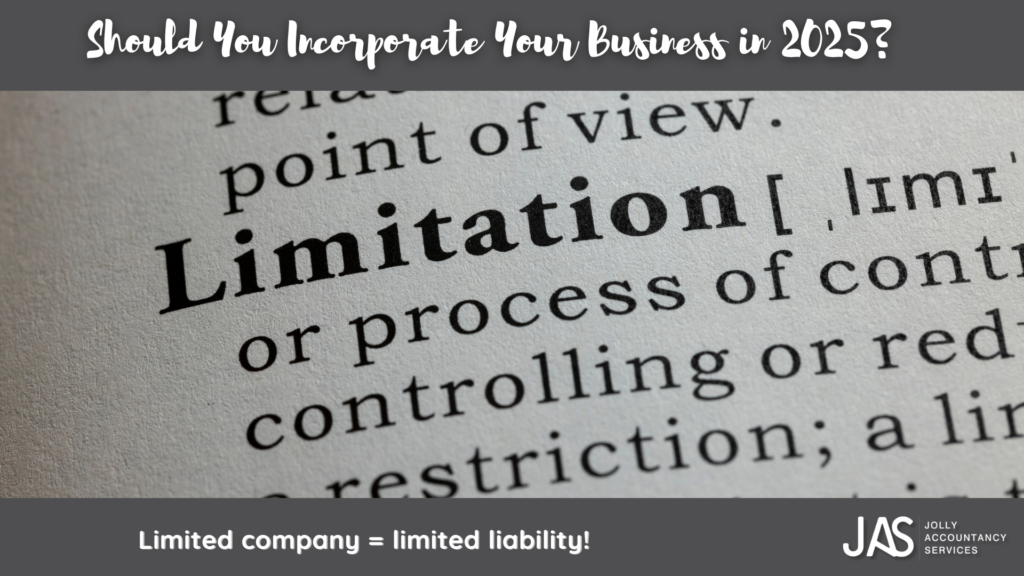
- One of the most significant advantages of incorporation is limited liability. As a sole trader, you are personally responsible for any debts your business incurs.
- A limited company, however, is a separate legal entity. This means your personal assets are protected if something goes wrong.
- Tax Efficiency
- Limited companies often benefit from lower tax rates. Corporation tax, the current rate is 19% on profits up to £50k, 25% on profits over £250k and at a tapered rate in between.
- You can also structure your income more flexibly, paying yourself a combination of salary and dividends to minimise tax liability.
- Professional Credibility
- Operating as a limited company can enhance your business’s reputation, as it often appears more professional and established to clients and investors.
- Some larger organisations only work with limited companies due to perceived stability and legal protections.
- Opportunities for Growth
- Limited companies may find it easier to raise capital through loans, investments, or grants.
- Having a formal company structure can also make scaling your business more straightforward.
- Separation of Finances
- Incorporation requires you to maintain separate business and personal finances, which can simplify accounting and provide clearer insights into your company’s performance.
The Drawbacks of Becoming a Limited Company
- Increased Administration
- Running a limited company involves more paperwork and reporting requirements, including filing annual accounts, corporation tax returns, and a confirmation statement with Companies House.
- You’ll also need to maintain accurate records of company finances and comply with stricter regulations.
- Higher Accountancy Costs
- Due to the complexity of managing a limited company’s finances, you may need professional help from an accountant, which can increase costs compared to self-employment.
- Less Flexibility
- As a limited company director, you are required to follow specific legal and financial rules, such as keeping business finances separate and paying yourself a reasonable salary.
- You may also have less freedom to access company funds compared to sole traders.
- Tax Implications of Dividends
- While dividends can reduce tax liability, they are subject to dividend tax rates and are not eligible for tax-free allowances such as personal pensions or student loan repayments.
- Initial Setup Costs and Time
- Incorporating a business involves upfront costs and effort, including registering with Companies House, setting up business bank accounts, and arranging insurance and compliance.
The Benefits of Staying Self-Employed
- Simplicity
- As a sole trader, your accounting and tax requirements are simpler and involve less administration.
- Filing a self-assessment tax return is straightforward compared to preparing company accounts.
- Lower Costs
- Self-employment avoids the extra costs associated with running a limited company, such as higher accountancy fees and registration costs.
- Flexibility
- Sole traders have more freedom to use business profits as they see fit without the formalities of dividends or payroll structures.
- Personal Approach
- For some industries, operating as a sole trader can feel more personal and approachable to clients, which may suit the nature of your business.
The Drawbacks of Staying Self-Employed
- Personal Liability
- You are personally responsible for all business debts and liabilities, which can put your personal assets at risk.
- Higher Tax Rates
- Sole traders pay income tax on profits, which can be higher than corporation tax rates for limited companies.
- You may also miss out on certain tax efficiencies available to limited companies.
- Limited Growth Potential
- Raising funds or securing larger contracts may be more challenging as a sole trader, particularly with larger organisations that prefer dealing with incorporated entities.
- Perceived Credibility
- Sole traders may be viewed as less professional or established compared to limited companies, which can impact opportunities with clients or investors.
So, Should You Incorporate in 2025?
The decision to incorporate depends on your business’s specific circumstances and future goals. Here are some key questions to consider:
- Are you earning enough to benefit from tax efficiencies as a limited company?
- Do you need the legal protection of limited liability?
- Is your business growing, or do you plan to seek investment or larger contracts?
- Are you comfortable with the additional administration and costs of incorporation?
If you’re unsure, consulting an accountant can help you weigh up the options and determine the best path for your business.
Final Thoughts
Incorporating your business can open doors to new opportunities, but it’s not a one-size-fits-all solution. Whether you choose to remain self-employed or take the leap into incorporation, the key is to align your decision with your business goals and personal circumstances.
If you’re thinking about incorporating in 2025 and need professional advice, get in touch. We can help you navigate the process and make the best choice for your business’s future.

I am the sole Director of the practice and my name is Sonya Jolly.
I qualified as a chartered certified accountant in 2000 and have over 20 years of general practice experience.
I like to get to know my clients well and to take the time to learn about all areas of their businesses, resulting in more tailored taxation and financial advice.
You may not think you can afford such a service but it is easily affordable when this means that you can use your time more effectively to do what you do best and let me concentrate on the financial and administrative side.