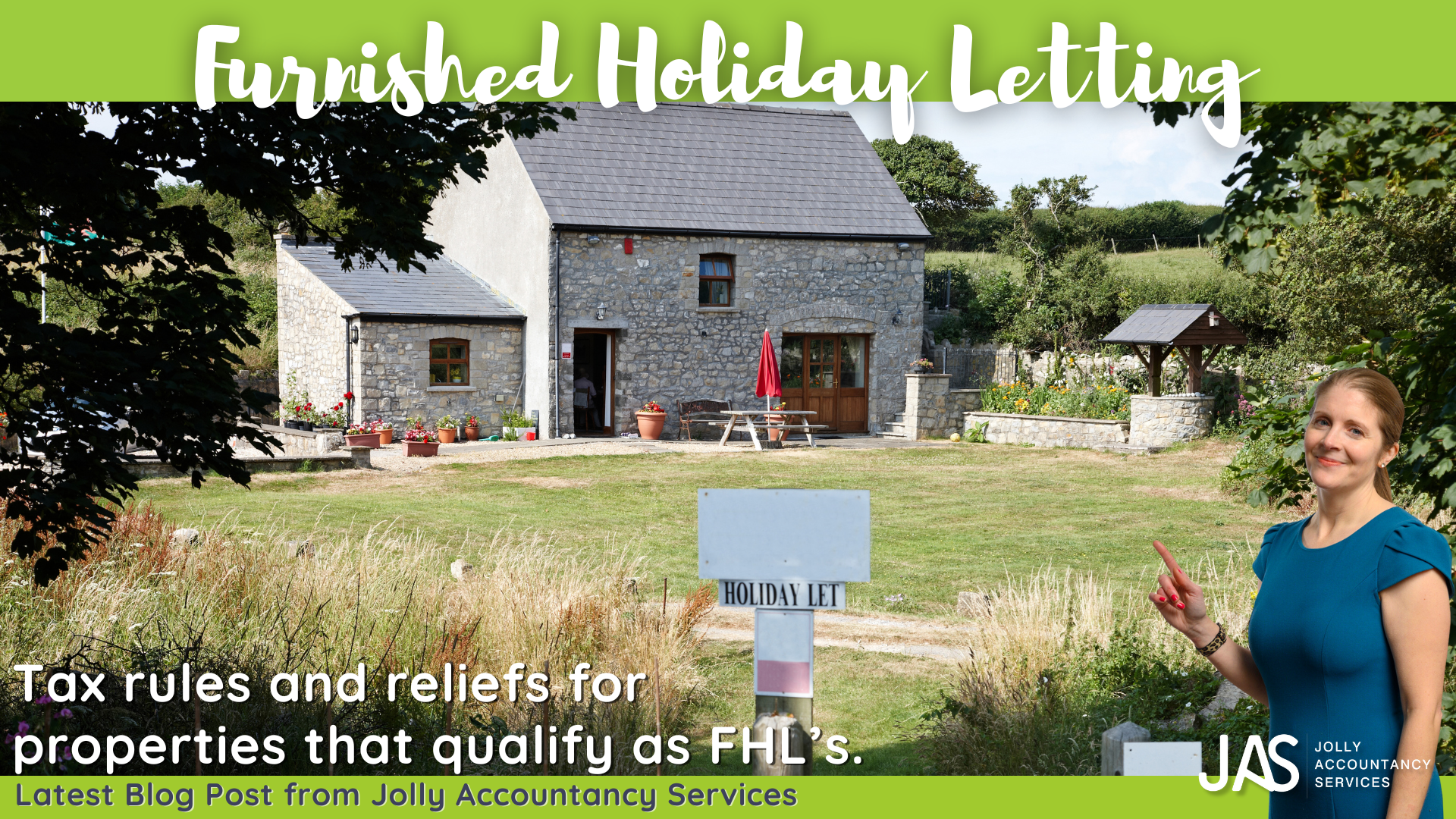
FURNISHED HOLIDAY LETTING (FHL)
In the UK, there are special tax rules and reliefs for properties that qualify as furnished holiday lets (FHL’s). This means that a FHL is more tax-efficient than other types of property let.
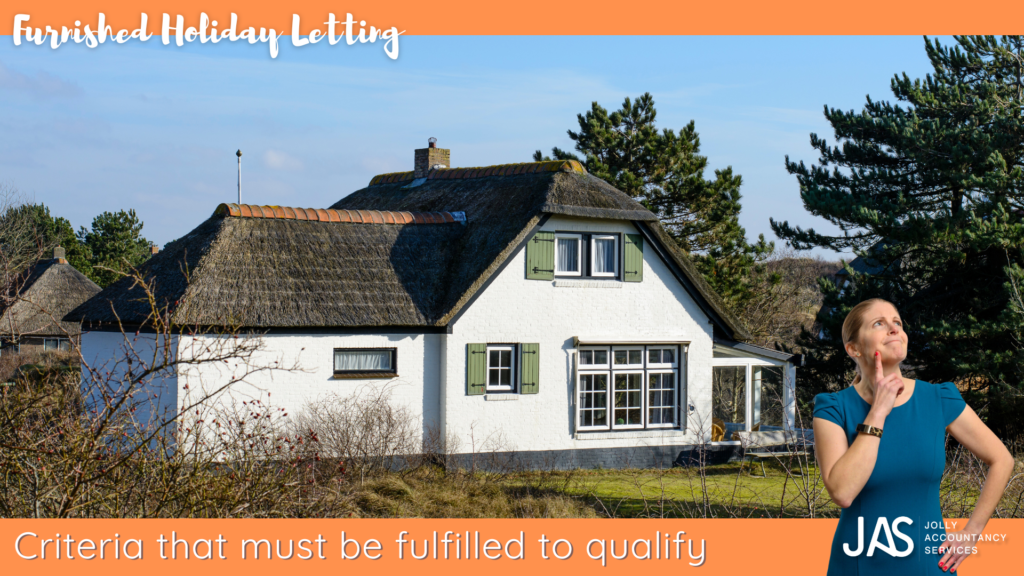
Criteria that must be fulfilled to qualify as a furnished holiday letting:
- It must be available for rent for at least 210 days in a year
- It must let for at least 105 days in a year
- It should not be occupied by long-term tenants for more than 155 days in a year.
- It must be furnished
- It must be situated in U.K or any other European country (EEA)
- The property must be commercially let, i.e. it is your intention to make a profit. If you let the property to friends or family for no or minimal cost, then this is not commercial.
A property does not qualify for FHL if it has been occupied by tenants living continuously for more than 31 days in a tax year. This means landlords should monitor the length of stay of their guests to make sure their property remains in the category of FHL.
As any FHL profit is taxable as rental income, Class 4 National Insurance is not payable.
The profits are subject to income tax.
What are the advantages of a Furnished Holiday Let?
You may claim Capital Allowances on the purchase of items for your furnished holiday let. This includes items such as furniture, equipment and fixtures.
The eventual chargeable disposal will qualify for Business Asset Disposal Relief (BADR). Therefore, instead of the rate of Capital Gains Tax (CGT) applied to the taxable gain being either 18%, 28% or a combination of both, it will be 10% (subject to a threshold limit).

Income generated from an FHL property is classed as ‘relevant earnings’ which allows you to take this income into account when calculating the level of pension contributions you may make in a year.
You do not pay Council Tax – instead, you will pay Business Rates with the potential to make a claim for Small Business Rate Relief, which can be up to 100% depending on what area the property is located.
In the case of more than one person running an FHL, the split of profits is decided according to partnership profit-sharing ratios as agreed by the partners. So it doesn’t need to be 50/50.
What are the disadvantages of a Furnished Holiday Let?
If your turnover from your FHL property portfolio exceeds the VAT threshold of £85,000, you will need to become VAT registered.
Losses from an FHL business cannot be offset against other income, instead, FHL losses are carried forward and offset against future profits. These losses can accumulate and be carried across multiple years.
What are the allowable expenses for a Furnished Holiday Letting?
When it comes to expenses, your FHL property is treated similar to that of a business. This basically allows you to offset expenses against your revenue. Two crucial points are:
Expenses claimed must be against commercial use only. If you, your family or friends use your property, your expense will be partly considered as ‘private use’. This means you will need to calculate what percentage of the expense is commercial. For example, if you use the property privately for 3 months of the year, 75% of your expenses will be considered as commercial.
Expenses must not be capital. For example, one-off payments for the purchase or construction of the property, or for its fixtures (capital allowances could cover these expenses though).
Here are some examples of allowable expenses:
- Utility bills
- Interest on loans associated with the property
- Insurance
- Advertising or letting agency fees
- Products bought for the property (cleaning products and welcome packs)
- Maintenance and cleaning costs
- Travel to and from holiday let
Who are Jolly Accountancy Services?
Jolly Accountancy Services is your local business specialist based in Gisburn, Clitheroe ideally placed to support Ribble Valley, Lancashire and Yorkshire businesses. Providing a personalised service to local business owners and individuals.