When do I need to apply for VAT registration?
If you are in business you might be wondering if/when you need to apply for VAT registration. In this month’s blog I will be covering all the necessary information you need to know to make a decision about whether this is something you need to apply for.
The current VAT registration threshold is £85,000.
You must register for VAT if you meet the conditions of either the historic or future turnover tests.
- The historic test considers your taxable supplies from the last 12 months. If the cumulative taxable supplies exceed the threshold, then you must register for VAT. This will start from the first day of the following month.
- The future turnover test asks you to look at the next 30 days in isolation. You will be charged VAT from the date when you became aware you were going to exceed the threshold of £85,000.
HMRC must be notified within 30 days of the end of the month in which the historic turnover test was met or by the end of the 30 days, for the future turnover test.
You must not charge VAT until you have been given your VAT number.

What happens if I register late?
A penalty may be issued for late registration. This is a percentage of the VAT due from the actual date you should have registered. This also depends on whether your failure to register is accidental/due to not realising or if it is deliberate and you have tried to conceal it. If you just did not realise this can be up to 30%, but deliberate is up to 100%.
Voluntary registration can be made when your business is making taxable supplies below the VAT threshold. This means you may not have reached the £85,000 threshold but you have a good reason to register for VAT (i.e. you are selling taxable goods where claiming back on VAT is more beneficial to your business.)
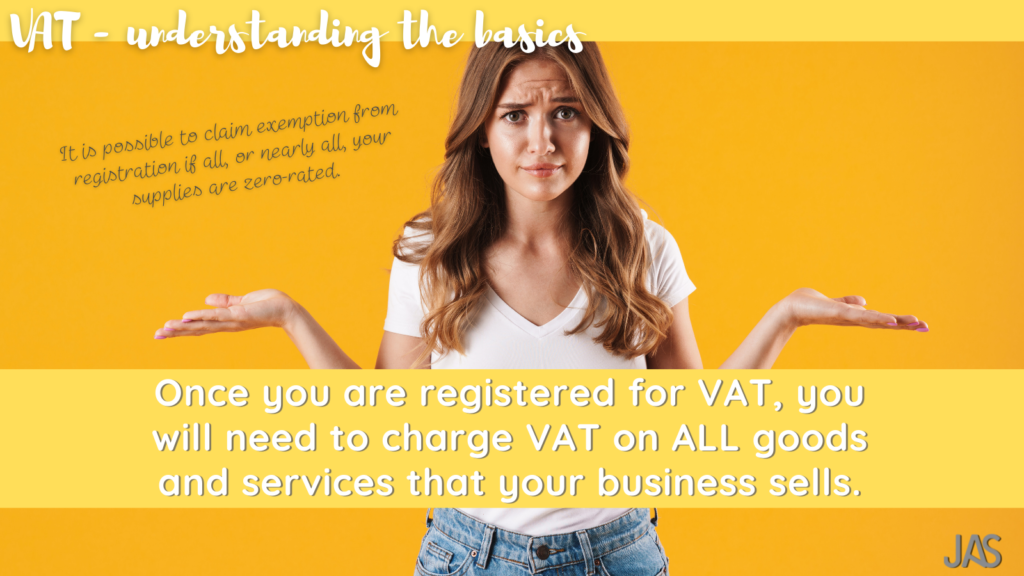
It is possible to claim exemption from registration if all, or nearly all your supplies are zero-rated.
Once you are registered for VAT, you will need to charge VAT on all goods and services that your business sells.
Is there anything else I need to do once I am VAT registered?
Registering for VAT also means that you are legally allowed to reclaim any VAT expenses that your business incurs on any goods or services it purchases.
Once registered, you will need to complete and submit, digitally under Making Tax Digital, a VAT return (usually quarterly) to HMRC. If the VAT you have collected on your sales invoices is more than the VAT you are reclaiming on your expenditure, you have to pay over the amount to HMRC. If your input VAT (on expenditure) is greater than the output VAT (on sales) then you will get a refund from HMRC
What must I include in a VAT invoice?
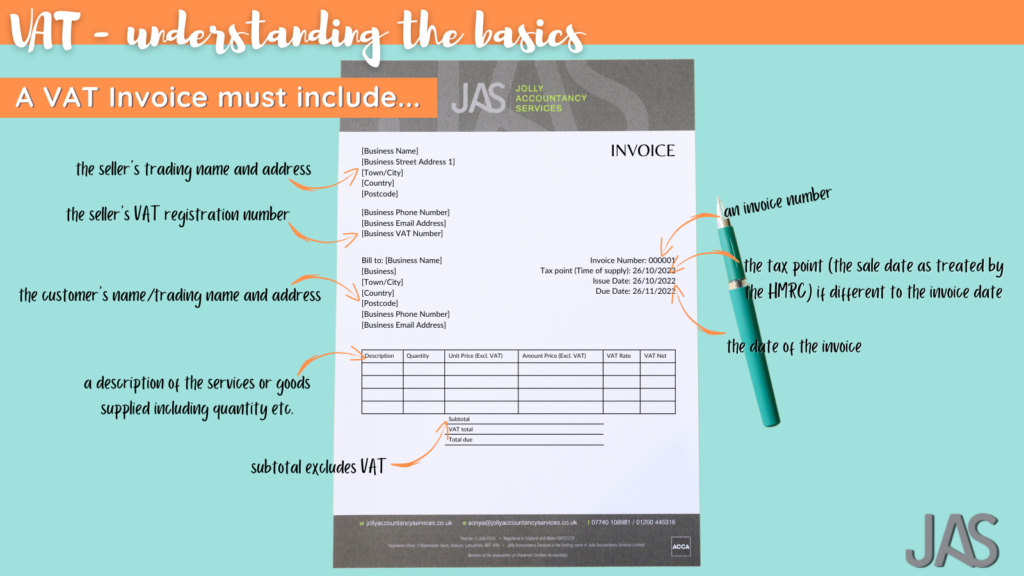
A VAT invoice must include the following:
- the seller’s trading name and address
- the seller’s VAT registration number
- an invoice number
- the date of the invoice
- the tax point (the sale date as treated by the HMRC) if different to the invoice date
- the customer’s name/trading name and address
- a description of the services or goods supplied
(See above image for example)

Do I have to register for VAT as soon as I start my business?
Often businesses register for VAT, years after they start trading. This might be because turnover did not previously exceed the VAT registration threshold of £85,000, or the business has changed in some other way.
It’s quite possible that expenditure incurred before registering for VAT was for goods or services that are still being used in the business after registering.
It is possible to reclaim the VAT you paid on goods bought up to 4 years before registering, and for services up to 6 months before.

Sonya is the sole Director of Jolly Accountancy Services.
She qualified as a chartered certified accountant in 2000 and has over 20 years of general practice experience.
She generally works with small owner-managed businesses and individuals and her approach allows her to develop lasting relationships with clients, providing them with all their accountancy and taxation needs and requirements.
You may not think you can afford such a service but it is easily affordable when this means that you can use your time more effectively to do what you do best and let her concentrate on the financial and administrative side.
To get in touch with Sonya click here.