Change In Basis Period Reform
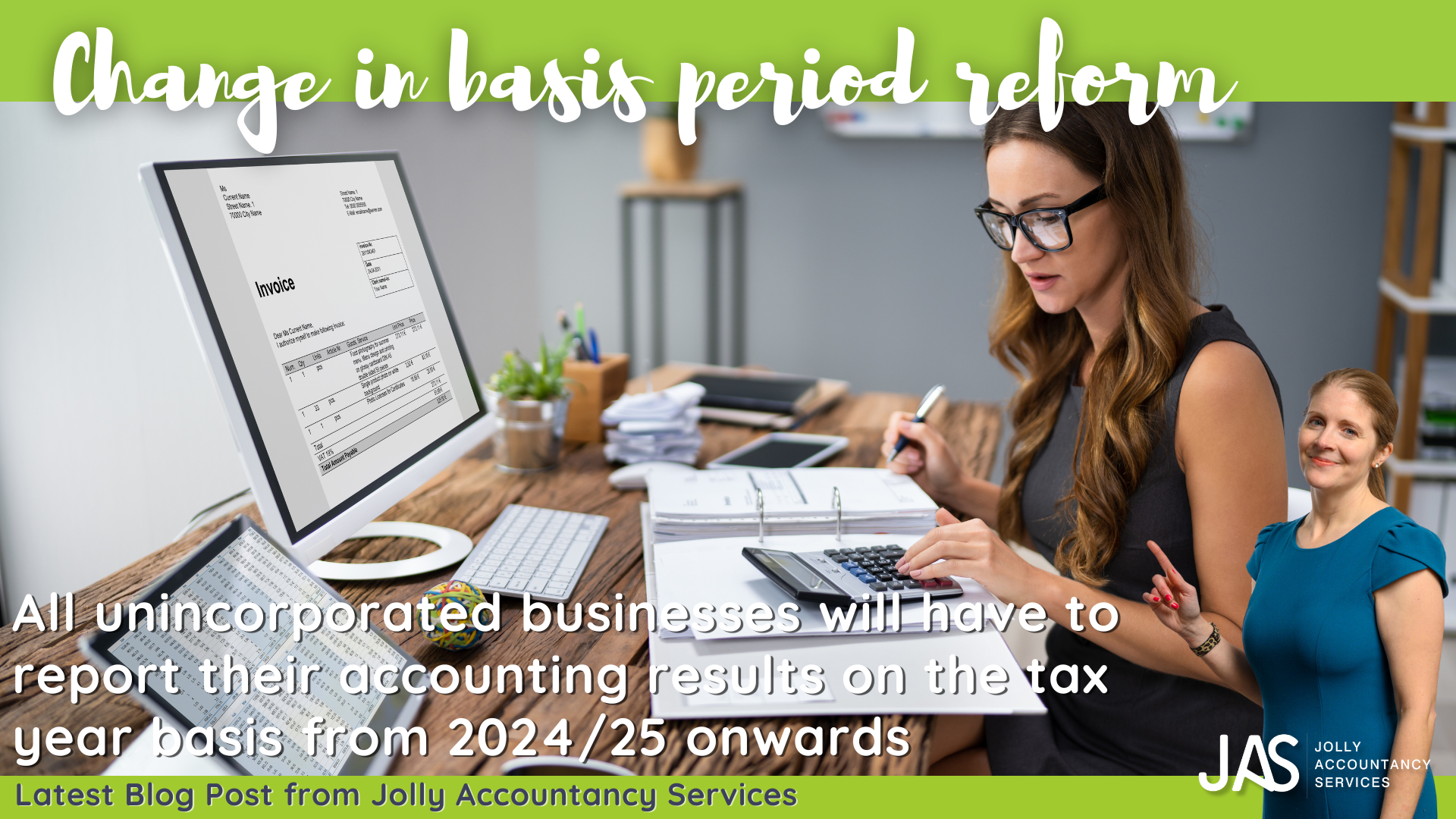
While there is a delay to Making Tax Digital for income tax self assessment, unincorporated businesses will have to report their results on the tax year basis from 06 April 2024.
This measure changes the way trading income is allocated to tax years. Current rules are based on a business’s accounting date, and can create overlapping basis periods, which charge tax on profits twice and generate corresponding ‘overlap relief’.

This measure simplifies the basis period rules
Making Tax Digital for income tax self assessment (MTD ITSA) has been delayed for at least two years – and more for partnerships – but all unincorporated businesses will have to report their accounting results on the tax year basis from 2024/25 onwards.
It will make everything much simpler
This means that if you are a sole trader or partnership and have a year end other than 31 March or 5 April, you will have to change from 06 April 2024 for tax calculation purposes. You can still have a different year end but will need to apportion it so it is in line with the new rules when you come to do your tax return which may be tricky and involve the use of estimated figures which you will need to amend when you have actuals. So to make it much simpler, you are better off changing your year end.
When Making Tax Digital then becomes mandatory from 06 April 2026 for sole traders/landlords with turnover over £50,000 (turnover over £30,000 from 06 April 2027) it will make everything much simpler as the year ends will align with the tax year.

The transition year
The tax year to 5 April 2024 is known as the transition year, as this is the year in which any adjustments are to be made to bring the accounting year end in line.
You may end up paying more tax than expected in 2023/24 – which is why HMRC has created relief measures.

Transitional Profits
In this period, businesses will pay tax on any ‘current year’ profits as they did previously (i.e. for the 12 months to the end of their accounting period which falls in 2023/24) but also, there may be tax on any profits made in the period between the end of the accounting period and 5 April 2024 (transitional profits).
This could mean paying tax on up to two years’ worth of profits
Depending on your business’s accounting period, this could mean paying tax on up to two years’ worth of profits at once. For example, businesses with a 1 May – 30 April accounting period could end up paying tax on 23 months worth of profits (profits from the period 1 May 2022 to 30 April 2023 plus profits from 1 May 2023 to 5 April 2024.)

Spread the transitional profit over the next five tax years
HMRC realises the burden this could place on businesses and individuals and will therefore automatically spread the transitional profit over the next five tax years. In addition to this, you may be able to reduce the amount of transitional profits you pay tax on by deducting any overlap profits your business may have generated in the past (see overlap relief below). The spread of profit will be applied unless you elect for it not to be.
Overlap relief
If you have a year end currently that isn’t 31 March/5 April you may have some ‘overlap relief’ that can be claimed against the extra profits. This would have occurred as a result of being taxed twice on some initial profits which fell into 2 tax years. This figure should have been recorded on your tax return and carried forward each year. However if it hasn’t been included in more recent returns, HMRC should be able to provide this information.
George Broadhurst. Director GJB Group
“Jolly Accountancy Services are an absolute pleasure to deal with. Sonya is very efficient and knowledgeable at what she does. No matter what we ask, she knows the answer instantly and advises with both pros and cons of both options. A good accountant should help reduce a lot of the pressure of running a business and this is certainly the case with Sonya and her team. I would highly recommend her.”